

Looking for the most efficient Air Source Heat Pump Singapore has to offer? You have found the right engineering partner. This guide explains how our industrial heat pumps save costs for local businesses.
What Is The Air Source Heat Pump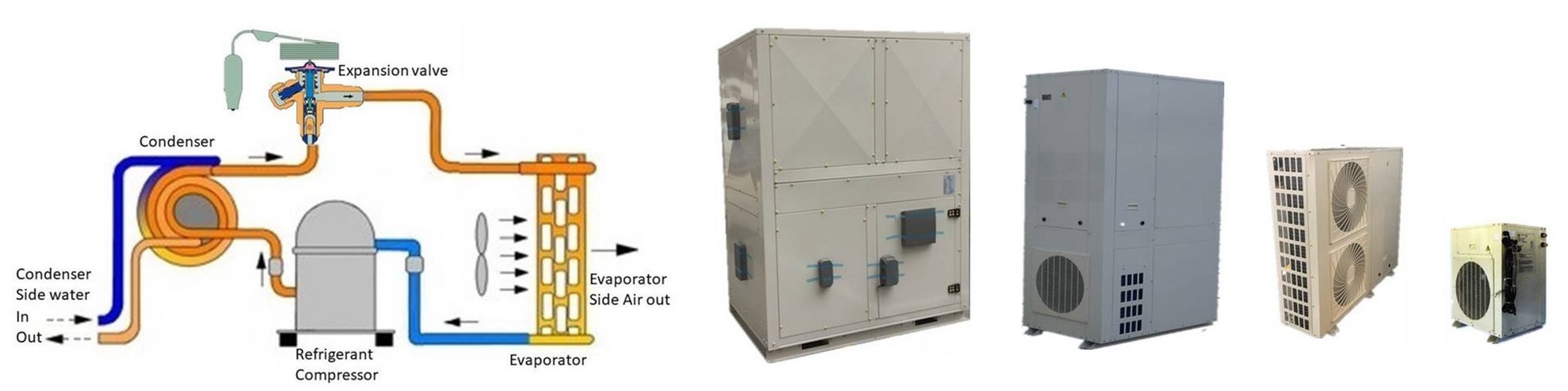
An air source heat pump (ASHP) is a system which transfers heat from The surrounding environment air to hot water(or other medium).
Under the principles of vapor compression refrigeration, an ASHP uses a refrigerant system involving a compressor and a condenser to absorb heat at one place and release it at another. They can be used as a space heater or cooler, and are sometimes called “reverse-cycle air conditioners”.
In domestic heating use, an ASHP absorbs heat from outside air and releases it inside the building, as hot air, hot water-filled radiators, underfloor heating and/or domestic hot water supply. The same system can often do the reverse in summer, cooling the inside of the house. When correctly specified, an ASHP can offer a full central heating solution and domestic hot water up to 70 °C.
Two Kinds Of Air Source Heat Pump: Domestic & Commercial

| Domestic Heat Pump | Commercial Heat Pump | |
| Water yield | Compact structure, small volume, small heating capacity, less electric power input, simple pipeline, easy to install |
Large heating capacity, so Commercial Heat Pump are relatively bulky Large electric power input needed keep long time running . manufacturer reserved a lot of space, in order to facilitate the air circulation and heat dissipation |
| Hot water tank | Commonly Domestic heat pump use pressure tank , no need hot water circulation pump |
Normally Domestic Heat Pump need Free-surface Water Tank and Hot water circulation Pump |
| Flexibility | With small power input, Domestic heat pump turn on/off easily. | The commercial machine usually running for a long time or in stages |
| Heating method | Fluorine circulation, that is to say, the water in the tank is stationary, Heat transfer in the water tank after the fluorine is heated through the Heat Pump, | Water circulation, water flows from water tank to the Heat Pump, absorb heat there,then com back to water tank |
Why Switch to Air Source Heat Pumps in Singapore?
In Singapore’s tropical climate, Air Source Heat Pumps are the most efficient way to generate hot water. Unlike standard electric heaters that consume massive amounts of electricity, our systems absorb free heat from the surrounding air.
Key Benefits for Commercial Buildings:
- Massive Savings: Reduces electricity bills by up to 70% compared to conventional calorifiers.
- Free Cooling: As a byproduct, the system blows out cold air, which can be used to cool nearby plant rooms (double benefit).
- Quick ROI: Most commercial projects see a Return on Investment within 18–24 months.
- Reliable: Designed for 24/7 industrial operation with low maintenance.
Key Features of Our Ultimate Heating System:
- High COP (Coefficient of Performance): Generates 4kW of heat for every 1kW of electricity.
- Dual Function: Provides hot water and free cold air for space cooling.
- Durable Compressor: Built with industrial-grade components for long lifespans.
- Smart Control: Automated temperature regulation for hotels and factories.
- Eco-Friendly: Significantly reduces carbon footprint compared to diesel boilers.
Frequently Asked Questions
What is the difference between Air Source and Water Source? Air source units absorb heat from the ambient air, making them easier to install in most Singapore buildings. Water source units require a water loop but can be more efficient in specific industrial setups.
How much can I save? Commercial facilities typically reduce their water heating bills by 60-75% after switching from electric heaters.
Our high-efficiency heat pumps can help your building achieve BCA Green Mark certification